
Life and Religion
| They’re taking care of the caregivers with support |
| Published Saturday, March 18, 2023 9:16 am |
They’re taking care of the caregivers with support
 |
| COURTESY MALIA FREDRICK |
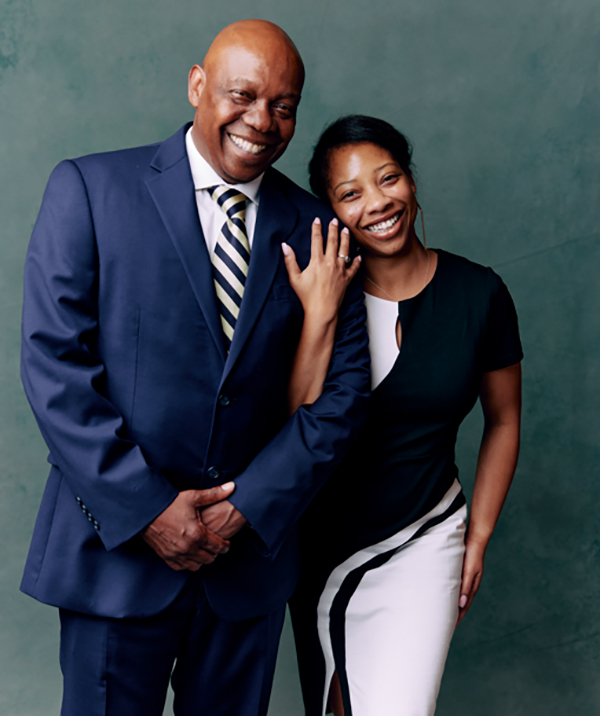
| Malia Fredrick and her father George. Malia joined other caregivers and the Rosalynn Carter Institute for Caregivers to develop the 4Kinds Network. |

Imagine as a teenager, your father asks: “If something were to happen to me tomorrow, who would you want to raise you?”
This was an actual conversation Malia Fredrick, who lives in Charlotte, had with her dad.
Fredrick, 31, was a caregiver as a child to her mother, Cassandra, who had sickle cell anemia.
“When you were a teen or you’re a child in general, you don’t even really know how to take care of yourself,” said Frederick. “But now you’re taking care of someone else and in our situation, it was my mom. Coming from being a child and learning, I kind of had to learn quickly and I had more responsibilities that I had to figure out and navigate early on.”
Fredrick’s father, George, was the primary caregiver and became a chef when Cassandra became sick. Despite the heartbreak associated with such hard conversations, Frederick and her father had to have a plan.
Cassandra, who died in 2019 at age 63, liked gardening, sewing, and was very artsy, according to Fredrick. She had three children, with Malia the youngest. None of the children developed sickle cell disease.
Instead, they live with the sickle cell trait, which causes no symptoms.
“When she passed, I felt like I lost my childhood in a lot of ways,” said Fredrick. “And for [my father] losing his partner and how all of the life decisions down to furniture had been made with her in mind. How do we move forward and what does that look like now?”
Malia continues to help other caregivers get through the tumultuous journey of caring for a sick loved one.
Fredrick banded together with fellow caregivers and the Rosalynn Carter Institute for Caregivers to develop the 4Kinds Network. The coalition works to rally caregivers and their allies to create systemic change in policy, research, media representation, and more.

With 53 million people caregivers in the United States, Fredrick’s story is not uncommon. Caregiving is not easy, and most families do not know what to expect and go into caregiving without a plan in place.
“We view the creation of the 4Kinds Network as a vital step in building a world where caregivers have robust systems of support, including financial resources, respite, mental health services and, of course, support from a well-compensated care workforce,” said Dr. Jennifer Olsen, chief executive officer of RCI.
The network has about 60 members and builds upon the work and legacy of the Georgia Care-Net Coalition, established in 1990 when RCI recognized a need in engagement and collaboration between paid professional and family caregivers.
“I really just want to highlight children, caregivers, and or college students, or young adults that are in those roles because I think that sometimes they’re often overlooked and the challenges of coming into your own while also caring for someone else is challenging,” said Fredrick. “That balance and mental health care as well is really important. If people make mental health resources available to them, that would be fantastic, and the organization is doing a lot of great work with advocacy as well.”
For more information on the Rosalynn Carter Institute, visit www.rosalynncarter.org.
This story corrects the spelling of Malia and George Fredrick's last name.
Comments
Send this page to a friend
Leave a Comment